How to Deal With Dairy Intolerance
Living with dairy intolerance can be confusing, frustrating, and sometimes even isolating — especially when people around you don’t fully understand what you’re going through. This guide breaks down the signs, the difference between dairy and lactose intolerance, how to approach doctors, and how to navigate eating out without stress.
Signs You Might Have a Dairy Intolerance
Dairy intolerance can show up in many different ways, and no two people experience it exactly the same. Some reactions are mild, while others can be severe and disruptive.
Common symptoms include:
- Diarrhea
- Nausea
- Bloating
- Gas
- Stomach cramps
- Skin breakouts
- Rashes
- Respiratory issues
- Sinus congestion
- Fatigue
If you consistently experience three or four of these symptoms after eating dairy, it’s a strong sign that something isn’t right. Some people react only to large amounts, while others experience symptoms after as little as 12g of dairy protein.
And yes — you’ll always hear someone say, “Just take a pill so you can enjoy the cake.” But if you need medication every time you eat a food, that’s your body telling you something important.
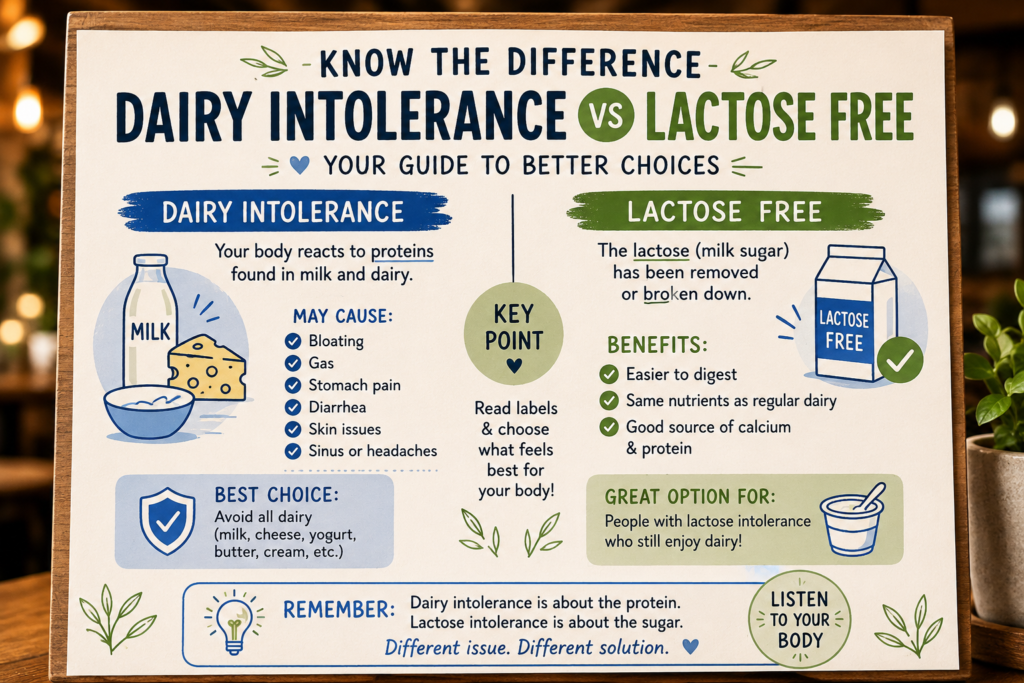
Dairy Intolerance vs. Lactose Intolerance
These two terms get mixed up constantly, but they’re not the same thing.
Dairy Intolerance
A reaction to dairy proteins (casein or whey) or additives in dairy products. Symptoms can affect digestion, skin, breathing, and sinuses — not just the stomach.
Lactose Intolerance
A digestive issue caused by the body not producing enough lactase, the enzyme needed to break down lactose (the sugar in milk). Symptoms are mostly gastrointestinal: bloating, gas, cramps, diarrhea.
My Experience
For a long time, I believed they were the same — until I started reacting to lactose‑free products. Waking up struggling to breathe, feeling completely blocked up, needing antihistamines and nasal rinses… that’s not lactose intolerance. That’s a reaction to dairy proteins.
Many people learn this the hard way, just like I did.
How to Talk to Your Doctor About Symptoms
My experience with doctors in Ireland is, unfortunately, very common. If something doesn’t show up on a blood test, many assume nothing is wrong. But you know your own body better than anyone.
I’m not telling people to avoid doctors — I’m sharing my reality. Many doctors are brilliant, but some still hold outdated beliefs about food intolerances.
You saw the difference in your own body when you removed dairy:
- Reduced swelling
- Clearer skin
- Less bloating
- Better breathing
- No more lumps around your neck
Those changes are real, even if a test didn’t confirm it.
If you do speak to a doctor, it helps to:
- Track your symptoms
- Note what you ate before each reaction
- Explain your response to lactose‑free products
- Bring photos of flare‑ups
- Ask for support, not dismissal

How to Eat Out Dairy‑Free Without Stress
Eating out with an intolerance can be stressful — especially when you’re with people who don’t have dietary restrictions. But this gets easier with time and confidence.
Here’s what has helped you:
✔ Becoming more vocal
You now ask questions, double‑check ingredients, and advocate for yourself. That’s huge progress.
✔ Using your chef background
You know what typically contains dairy, which helps — but it also means you know how annoyed some chefs can get. Still, you’re paying for the meal. You deserve to enjoy it.
✔ Restaurants are improving
More kitchens are allergy‑aware. Many now ask the table about allergies before taking orders, which removes the awkwardness.
✔ Accepting limitations
Coffee shops won’t always have dairy‑free cakes or pastries — but options are increasing as plant‑based eating grows.
✔ Learning from past mistakes
Once I ordered an oat cappuccino and got regular milk. I didn’t speak up then, but I would now. That’s growth.
And no — you’re not being “awkward” or “difficult.” You’re taking care of your health.